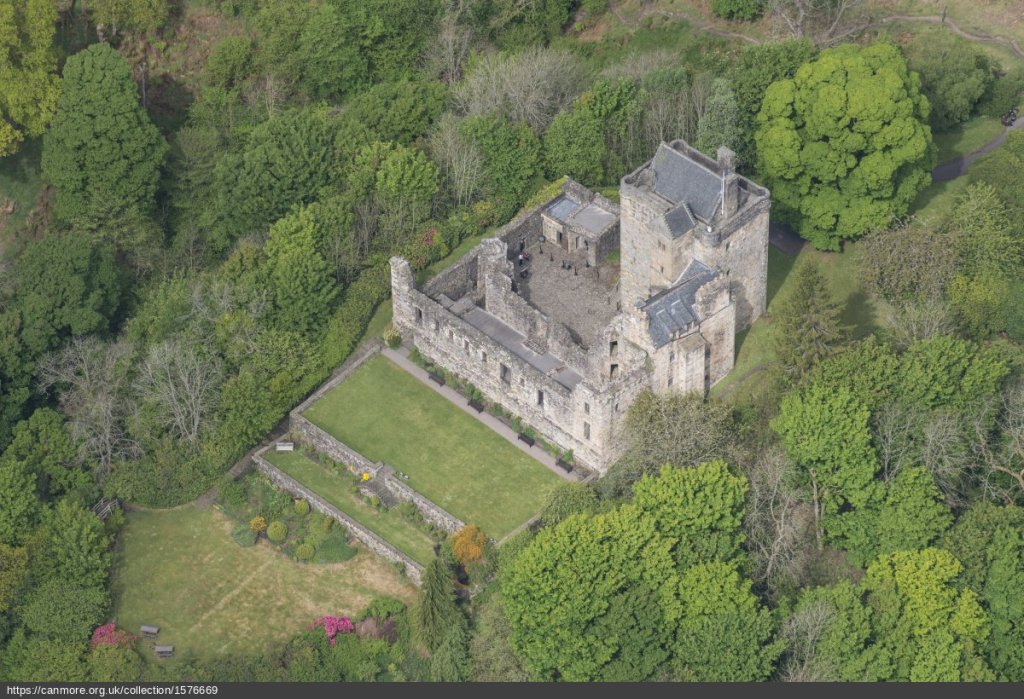
Castle Campbell sits high in the Ochil Hills with commanding views over the Forth Valley to the south and makes a rewarding stop on a short hike through Dollar Glen. The castle, not far from Stirling, became the Lowland seat of the powerful Campbell earls of Argyll in the mid-15th century, though its origins date to a motte castle from the 12th or 13th century. The castle began to take on its current shape with the building of a tower house, probably by John Stewart, Lord of Lorn, in the early 15th century. Lorn died without sons so his son-in-law, Colin Campbell, Earl of Argyll, used his marriage to Lorn’s eldest daughter to claim the castle in 1466.
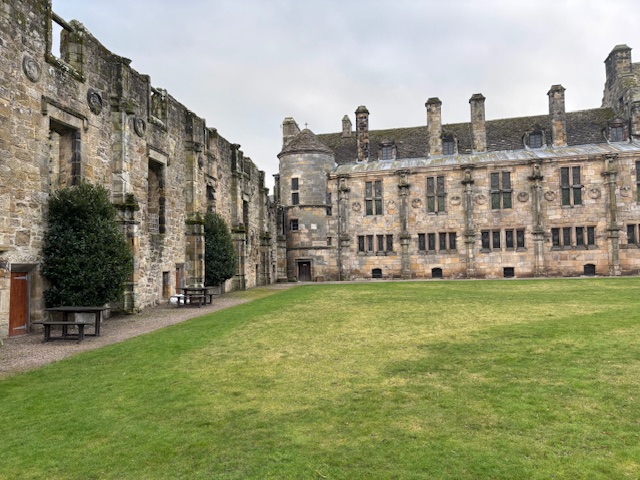
The picturesque Fife village of Falkland is dominated by the Renaissance palace that shares its name. The palace and gardens are managed by the National Trust for Scotland and make a great destination for a day out from Tigh a’ Mhaide. The palace was a favourite royal playground where Scotland’s kings and queens hunted and relaxed. More recently, the palace and Falkland village featured in the TV series Outlander, standing in for Inverness.
The medieval castle that preceded the palace at Falkland was a stronghold of the earls of Fife. It became the property of the Scottish crown in 1425 when Murdoch Stewart, earl of Fife at the time, was arrested, tried and executed for involvement in the gruesome murder of the heir to the throne. The murder victim was David, duke of Rothesay, who was thought to have been starved to death at Falkland by Murdoch’s father, Robert.
A visit to the Library of Innerpeffray, near the Perthshire town of Crieff, is a must for history and book lovers. Founded around 1680 by David Drummond, third Lord Madertie, it is the oldest public lending library in Scotland. The library initially comprised Drummond’s personal collection of books which he stored in the 16th-century St Mary’s Chapel and made available to local people to borrow free of charge.
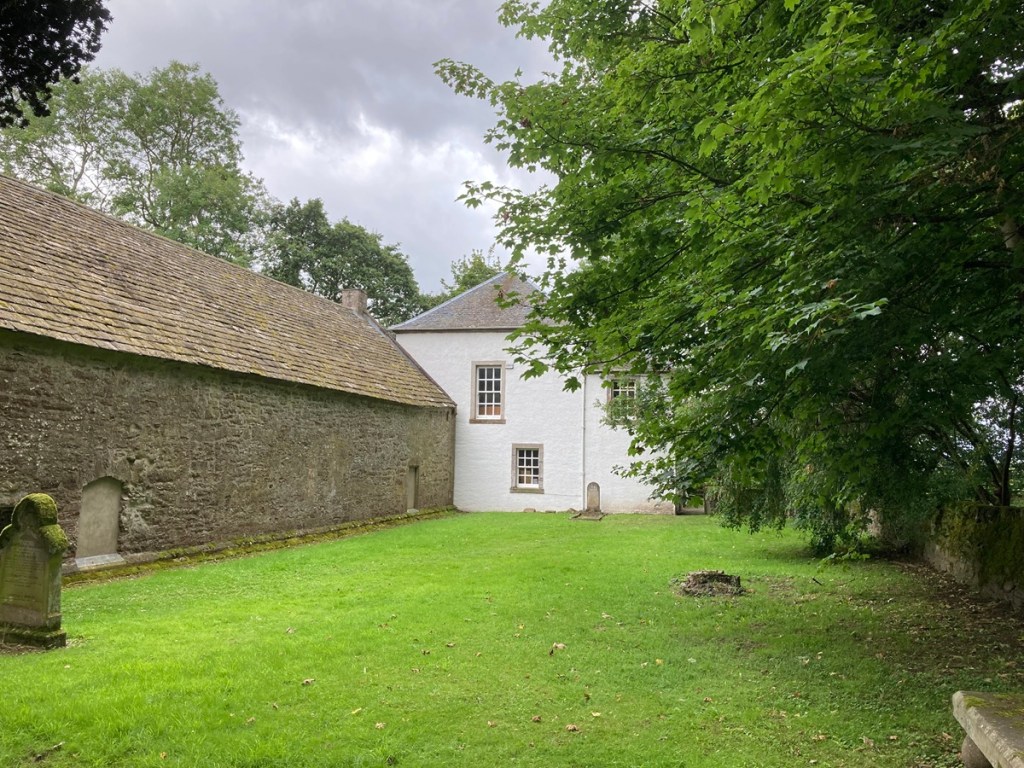
The original library was housed in St Mary’s Chapel (left) before moving to its current home in the purpose-built, adjacent building (centre).
In the mid-1700s, Robert Hay Drummond commissioned a new building for the library adjacent to the chapel and the books are housed there still. On a recent visit, we were greeted as we arrived by Lara Haggerty, Keeper of the Books, who explained the origins of the library, its expansion into the current building and some of the highlights of the collection. Before we started the tour, we got to choose a souvenir bookmark featuring woodcut illustrations from some of the collection’s 16th and 17th century books, and emboss it with the library’s stamp.
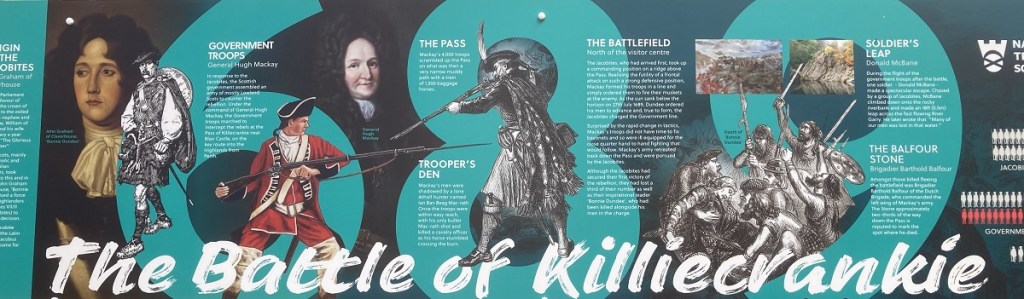
Today marks the 334th anniversary of the Battle of Killiecrankie. It was fought on July 27, 1689 between Jacobite forces led by John Graham of Claverhouse, first viscount Dundee* and government troops under Major-General Hugh Mackay. The battle was part of the Highland War that followed the overthrow of the Catholic king James VII of Scotland and II of England in favour of Protestant William of Orange and his wife Mary (James’s elder daughter). Heavily outnumbered, the Jacobite forces achieved an unexpected victory in the short battle that evening but Dundee was shot dead in the final stages. Without Dundee, the Jacobites were unable to replicate their success and were defeated the following month at Dunkeld, and although a fierce campaign of raid and counter-raid followed, the war ended in a truce in the summer of 1691.
The Battle of Killiecrankie was the first major action in Scotland between supporters of the ousted King James (the Jacobites) and William of Orange’s army. Near the battle site, at the northern end of the Pass of Killiecrankie, a National Trust for Scotland visitor centre summarises the story. The main action took place about a mile from the visitor centre, across what is now the A9 main road from Perth to Inverness, but the narrow, deep gorge of the pass played an important role in the battle too as government soldiers advanced along it then fled back the same way, pursued by their Jacobite opponents.
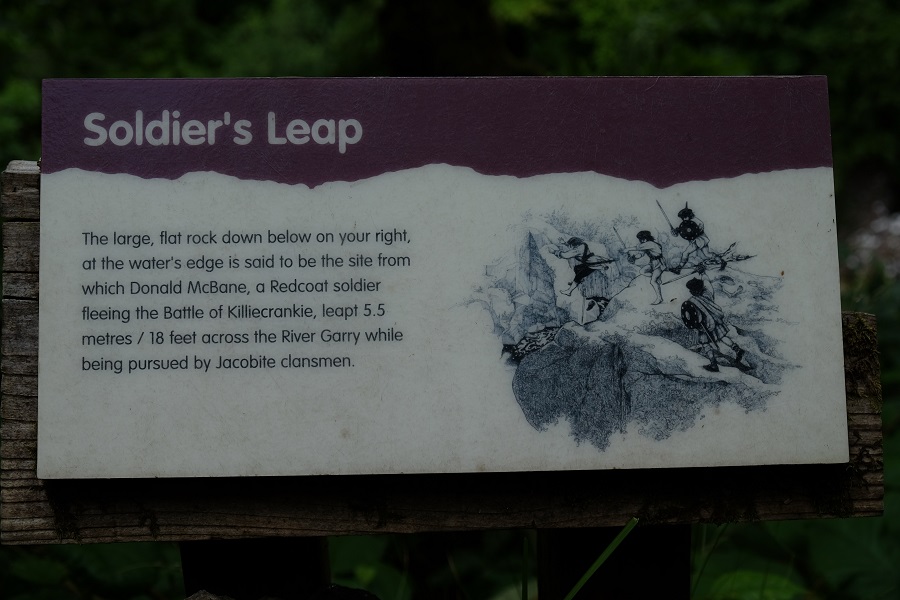
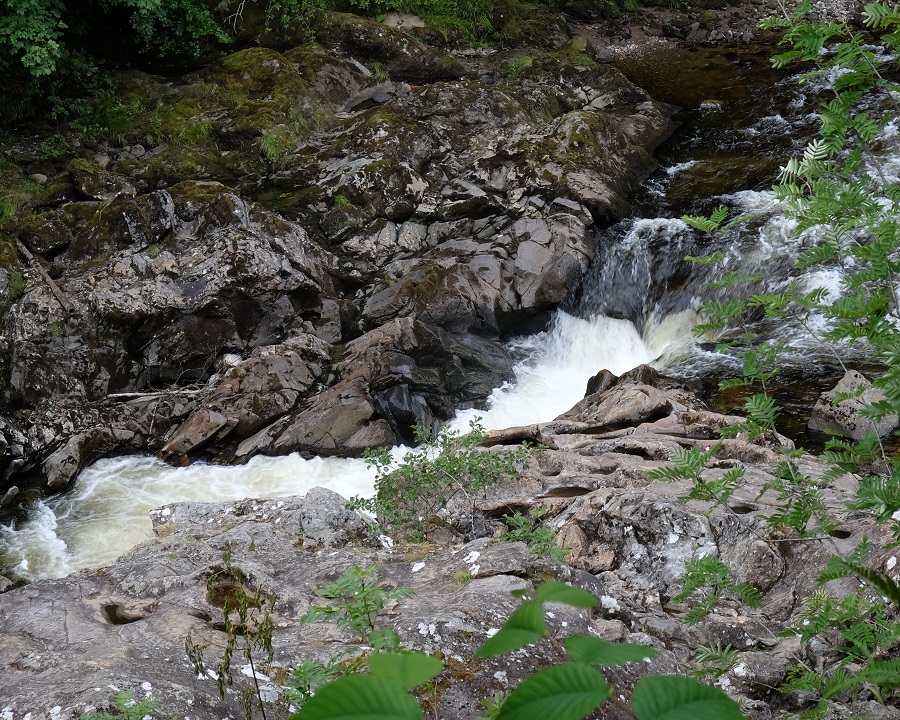
Imagine making this leap with enemy soldiers hot on your heels.
The river flowing through the Pass of Killiecrankie is the Garry and there are several riverside walks along the gorge which make for a lovely afternoon out amidst beautiful scenery. The pass is also a rich wildlife habitat and the National Trust has plenty of information at the visitor centre and along the routes about its conservation work.
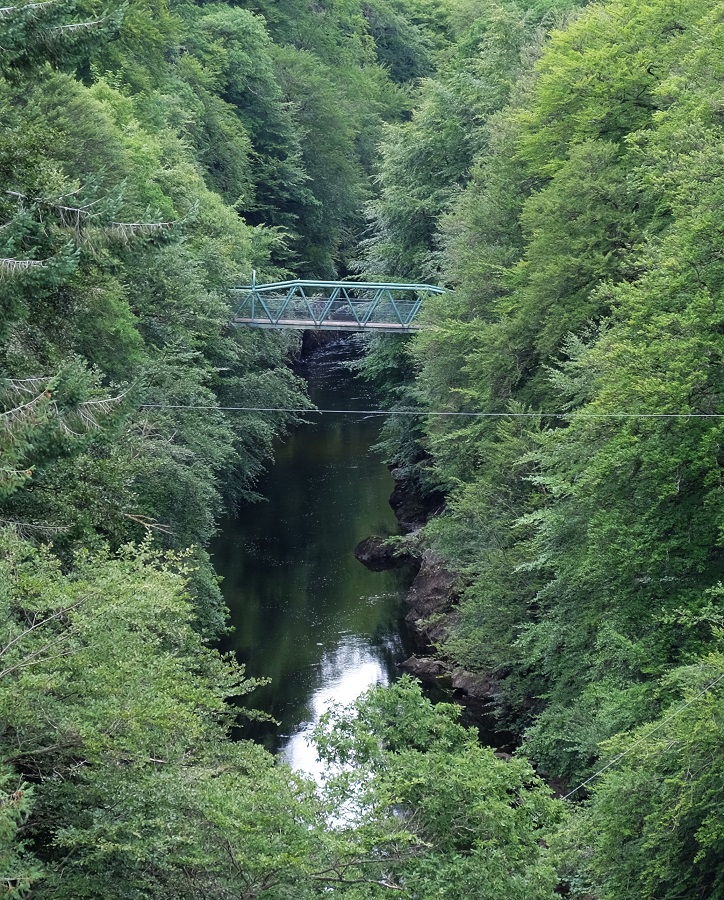
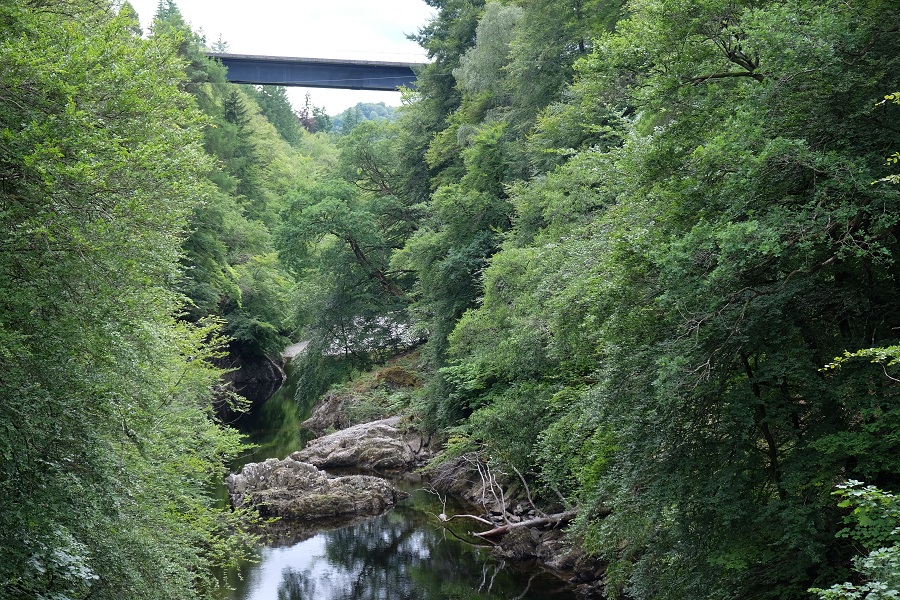
About two-thirds of the way along the pass, a green, metal footbridge spans the river. Looking north up the pass, the drop to the gorge floor seems huge but, turning to the south, the road bridge is even higher, emphasising the sheer depth of the pass.
The footbridge across the Garry pictured from the road bridge.The River Garry road bridge is over 130 feet above the gorge floor.
The height of the road bridge above the gorge means adventurous folk can hurl themselves off a platform slung below it towards the river, 132 feet below, on the end of a rope. Bungee jumping isn’t for me but when I passed yesterday, there were several people leaping into the abyss and a small audience had gathered on the riverside to watch. In the same area, is a course of nine zip lines through the trees and across the river, so if physical thrills are your thing Killiecrankie is a good place to go.
The southern end of the pass broadens out towards the confluence of the rivers Garry and Tummel. Close to this junction are the waterfalls at Linn of Tummel. These are well worth a visit. Queen Victoria clearly thought so as there is an obelisk nearby commemorating her visit to the spot in 1844. (Is there anywhere she didn’t visit?) The walk to the falls passes under the road bridge and continues along the western river bank. There are plenty of places where you can get right down to the water and yesterday paddle boarders, canoeists and swimmers were making the most of ready access to the water from extensive pebble beaches.
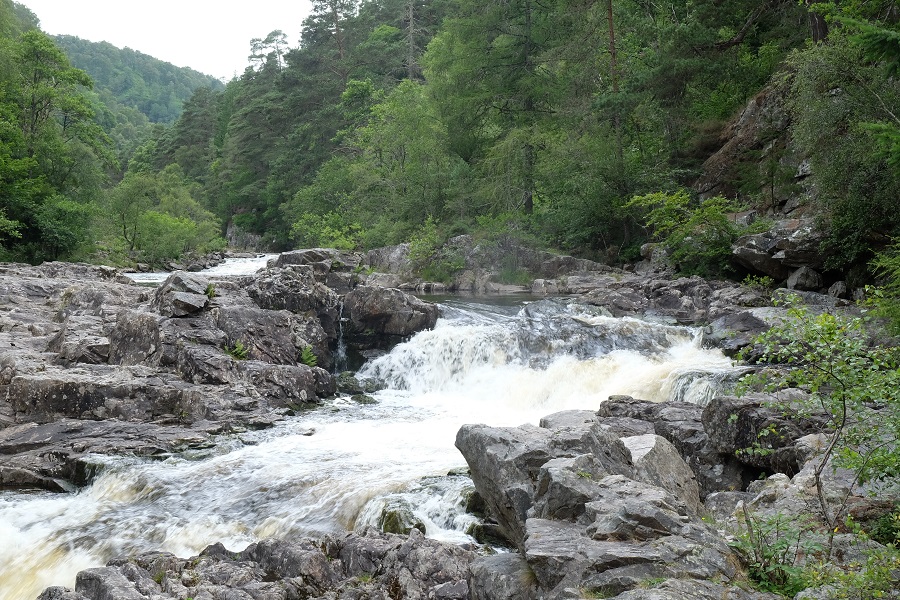
The falls at Linn of Tummel.
* John Graham was only around 40 when he was killed at Killiecrankie. He had served in the military since his early 20s and was recognised as a skilled leader. His relative youth and handsome face earned him the nickname Bonnie Dundee in some quarters. However, others remember him as Bluidy Clavers because of his violent suppression of covenanters in south-west Scotland. But that’s another story.
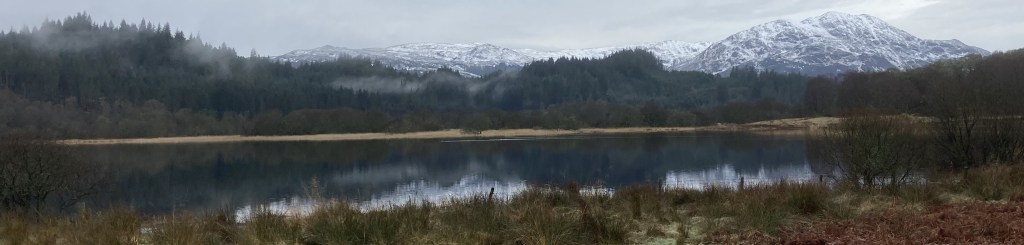
Hogmanay is a great day for reflecting on the year past and the new one to come. As the first dry day for ages, it was also a welcome opportunity to get outside and stroll along to Loch Venachar through the Great Trossachs Forrest.
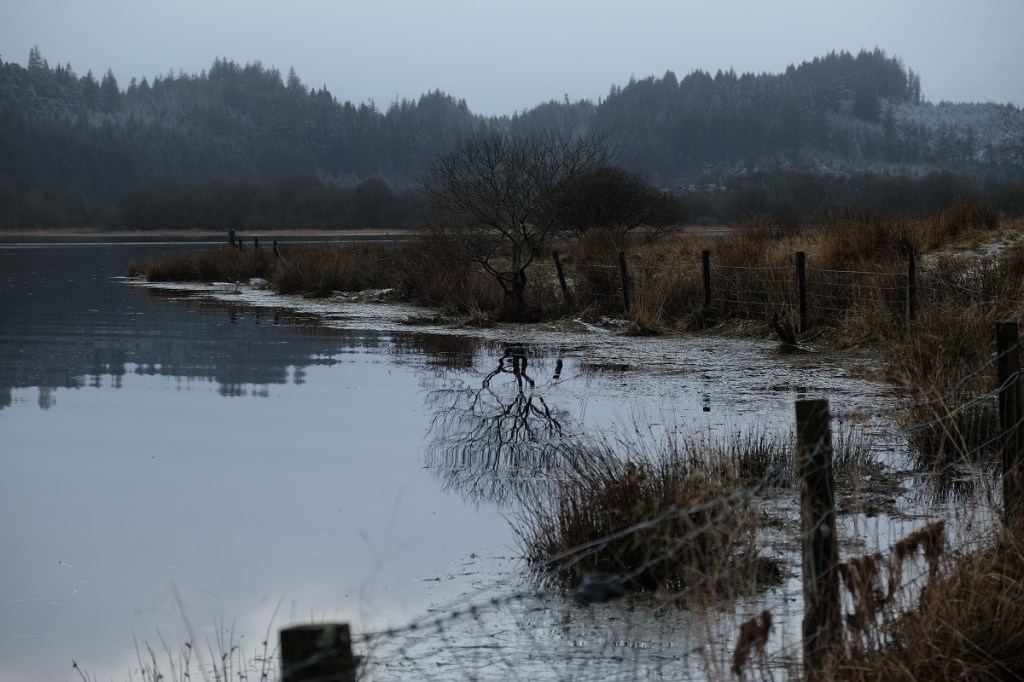
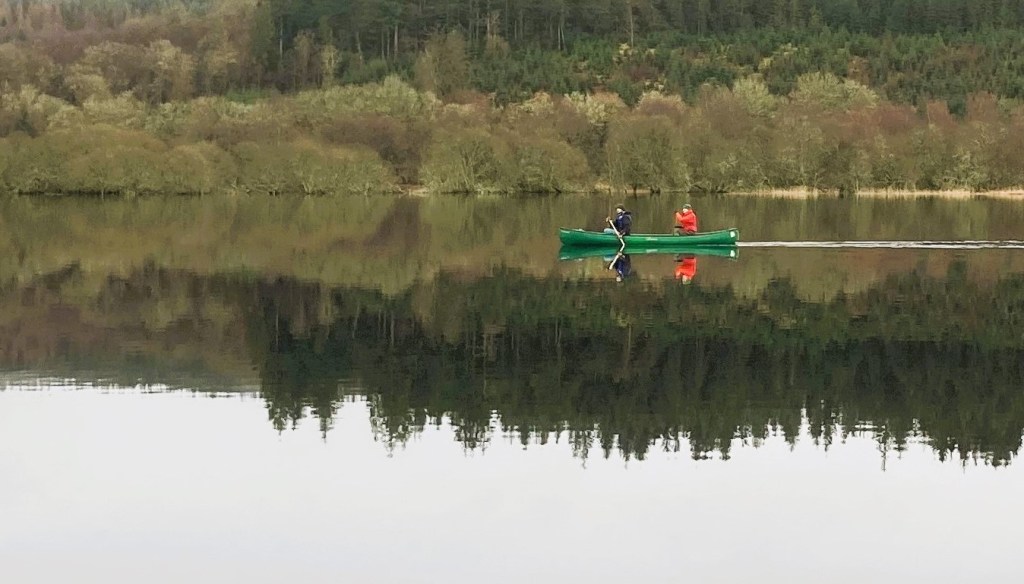
Low cloud, ice-fringed water and snow on the hills made for chilly, monochrome views but there was some colour in the landscape in the shape of a pair of intrepid canoeists exploring the loch from the water.
Two years ago, Scotland was in festive lockdown and the usual Hogmanay celebrations could not take place. Instead, a light show with drones and poetry marked the end of a difficult year and the hope for a new and better one for us all. While much of life has returned to normal, many of these sentiments are just as valid now, so here is another look at the wonderful Hogmanay Light Show of 2020 with words by poet and former Makar Jackie Kay, music by Niteworks and readings by some very well known voices including Siobhan Redmond and David Tennant.
This year has been the first full, uninterrupted season for Tigh a’ Mhaide self-catering and we are beyond chuffed to mark it by achieving four stars in the Visit Scotland quality assurance scheme. We welcomed our first guests in June 2019 but thanks to two lockdown closures, 2022 has been our first full year.
In total, we have hosted over 100 amazing families and groups of friends in the private annex of our traditional cottage and we learn something new each time, not least how to cope with a major, winter power failure (though we have Storm Arwen to thank for that rather than our lovely guests!). Since day one, we’ve wanted to offer a high-quality place to stay, the kind of place we would love if we were on holiday ourselves (some would say, living here is like being on holiday all the time 😊). We’ve worked hard, sought advice, acted on guest feedback and nicked good ideas when we’ve come across them, so achieving the validation of a 4⭐ award is very exciting. We’ll keep working to make Tigh a’ Mhaide self-catering the best it can possibly be. In the meantime… come and stay!
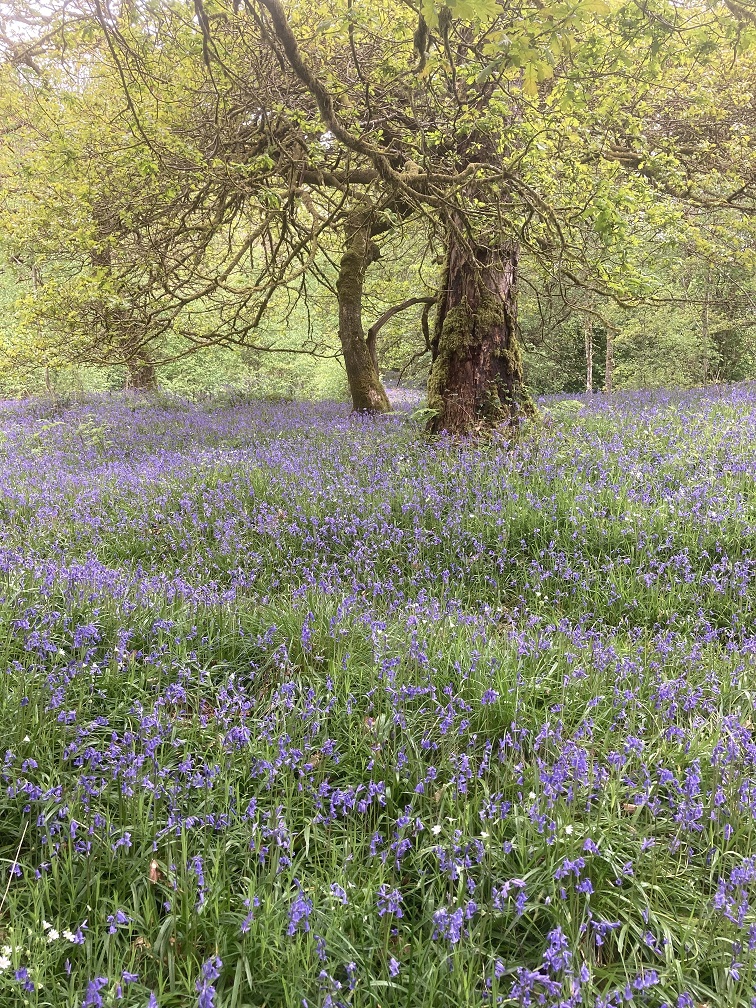
This is my favourite time of year; the days are getting longer and it’s already light well into the evening, there are often warm and sunny spells of weather, and our woods are carpeted with beautiful blue flowers.
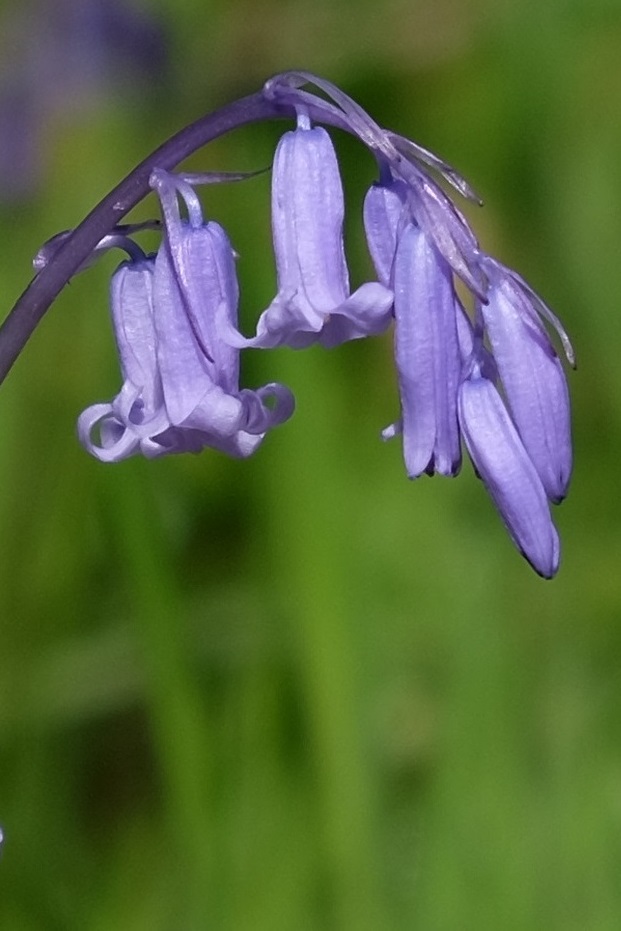
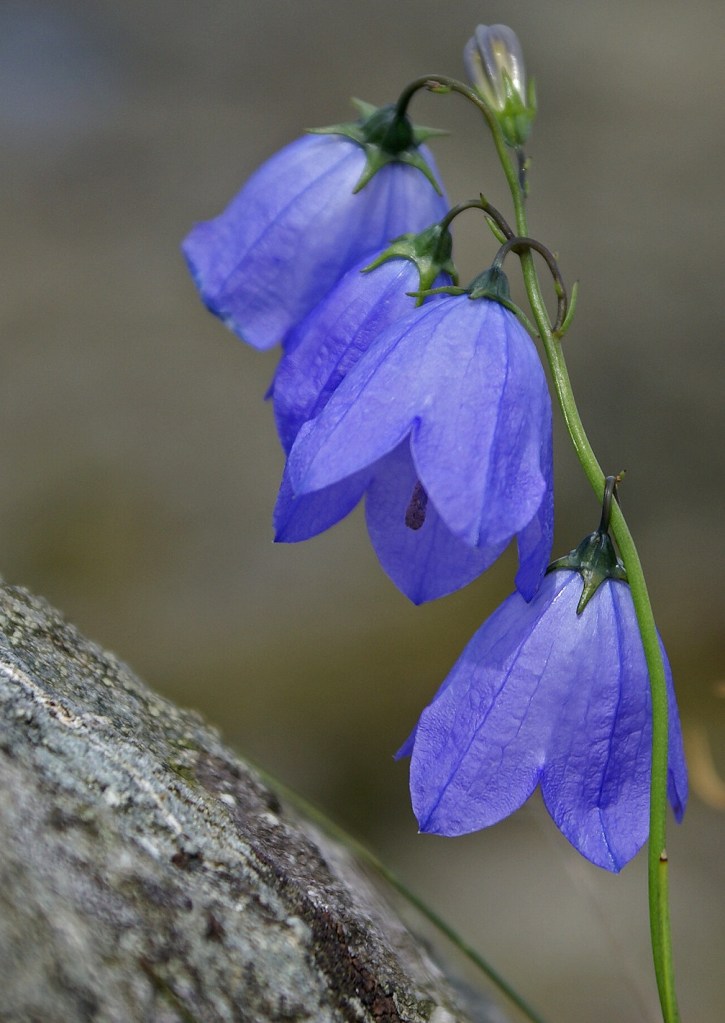
Most people would call the flowers in the image above bluebells, but in Scotland they are also known as wild hyacinths because Scottish bluebells are a different flower altogether. The blue flower that appears in ancient woodland in spring is the Hyacinthoides non-scripta (below, left). The Scottish bluebell is Campanula rotundifolia which flowers in the summer and is also known as the harebell (below, right). If this leaves you feeling somewhat confused, you are not alone. A public poll conducted by the Royal Botanic Garden Edinburgh found the ‘Scottish bluebell’ was second only to the Scots Pine as the nation’s favourite plant but sparked debate about which species of flower voters actually meant.
Large colonies of bluebells (wild hyacinths), comprising millions of bulbs, are particularly associated with ancient woodland because they take many years to become established.Traditionally, bluebell sap was used as an adhesive, in making arrows and in the book trade, while crushed bulbs were a useful source of starch for stiffening cloth. Bluebells have magical associations too. Anyone picking bluebells risked being spirited away by fairies and hearing a bluebell bell ring was said to herald a visit from a malicious fairy. Perhaps more usefully, a garland of bluebells was thought to compel the wearer to tell the truth.
Nowadays, bluebells are a protected species and the concern is more about their loss as a result of damage to woodland from development and trampling feet than their use by fairies to trap the unwary … but still, better not pick them, just in case.
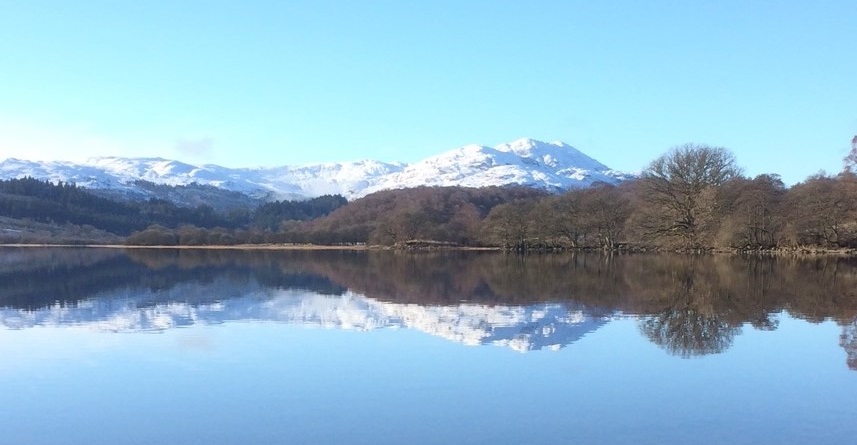
January in Scotland is frequently cold, dark and dreich. Sometimes it snows, often it rains. It can be stormy too. It is the middle of winter after all, so none of this is a surprise. But when the clouds clear and the sun shines, the winter landscape is spectacular, especially on crisp, frosty days. Our local Ben Venue below, for example, looks majestic cloaked in snow rising above the blue waters of Loch Venachar.
Not convinced? Then have a look at this wonderful short video of the beautiful wintery Scottish landscape from rewilding charity Scotland: The Big Picture. (Did that mountain hare just wink?)
You can find out more about Scotland: The Big Picture online here.
Much of the local wildlife is most active at night so it can be hard to spot. Occasionally, however, we are treated to daytime sightings of some usually elusive creatures. In the first video, a golden-ringed dragonfly performs its mating dance at the edge of the river near Tigh a’ Mhaide, beating its tail in the water at the river’s edge until its mate arrives.
The young pine marten below has discovered a liking for peanuts and is hogging the bird table outside the kitchen window to get its (more than) fair share. Pine martens are often nocturnal visitors to this window ledge but it is unusual to see one in broad daylight like this.