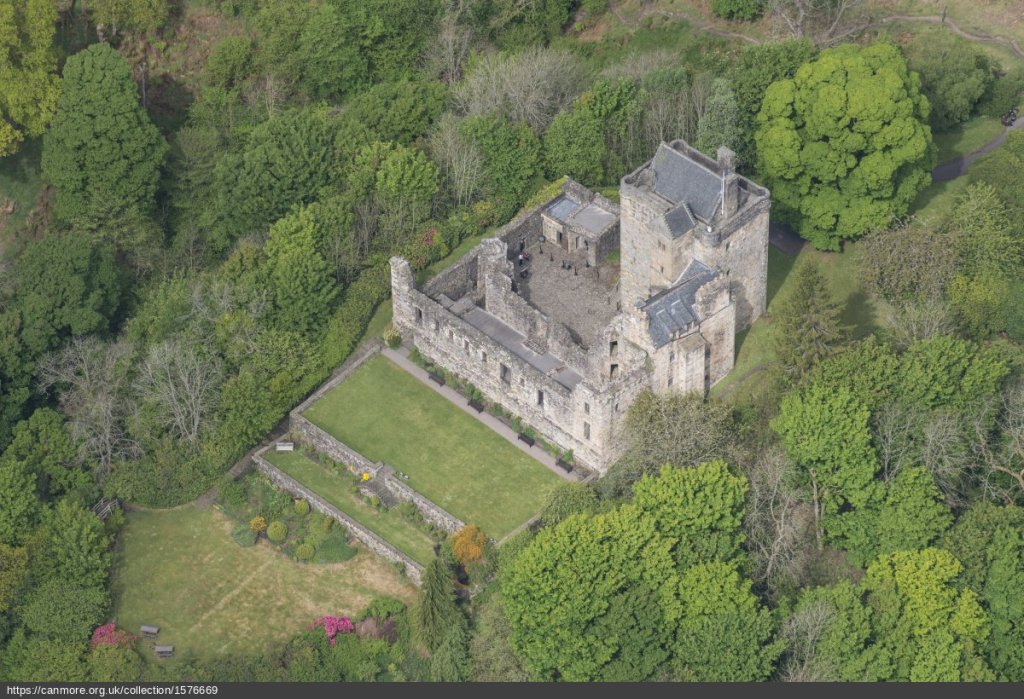
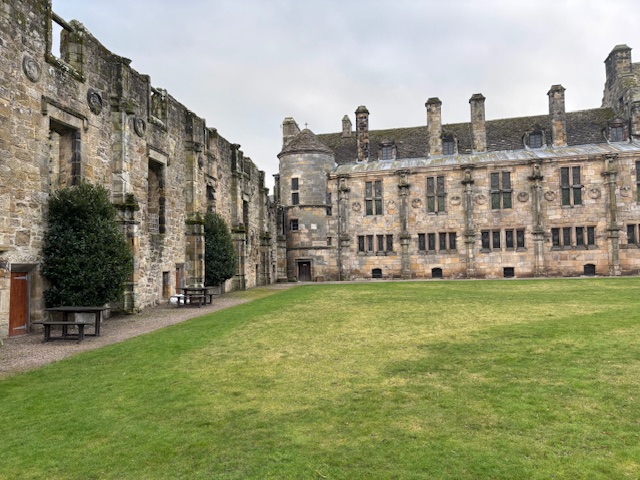
Castle Campbell sits high in the Ochil Hills with commanding views over the Forth Valley to the south and makes a rewarding stop on a short hike through Dollar Glen. The castle, not far from Stirling, became the Lowland seat of the powerful Campbell earls of Argyll in the mid-15th century, though its origins date to a motte castle from the 12th or 13th century. The castle began to take on its current shape with the building of a tower house, probably by John Stewart, Lord of Lorn, in the early 15th century. Lorn died without sons so his son-in-law, Colin Campbell, Earl of Argyll, used his marriage to Lorn’s eldest daughter to claim the castle in 1466.
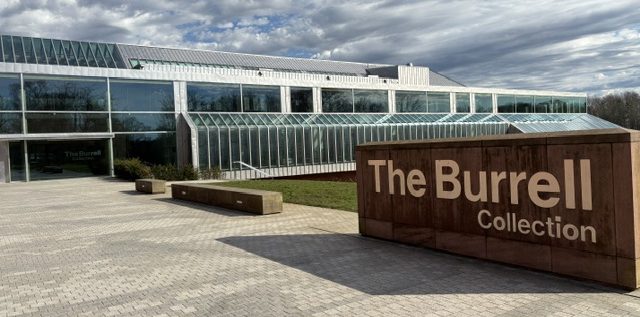
The Burrell Collection, housed in a purpose-built gallery in Glasgow’s Pollok Country Park, is a remarkable collection of over 9,000 artworks and objects gifted to the people of Glasgow in 1944 by shipping magnate Sir William Burrell and his wife, Lady Constance. Begun in the 1870s, the collection includes objects from ancient civilisations, European art, arms and armour, tapestries, stained glass, furniture, architectural fragments and one of Europe’s most important collections of Chinese art.
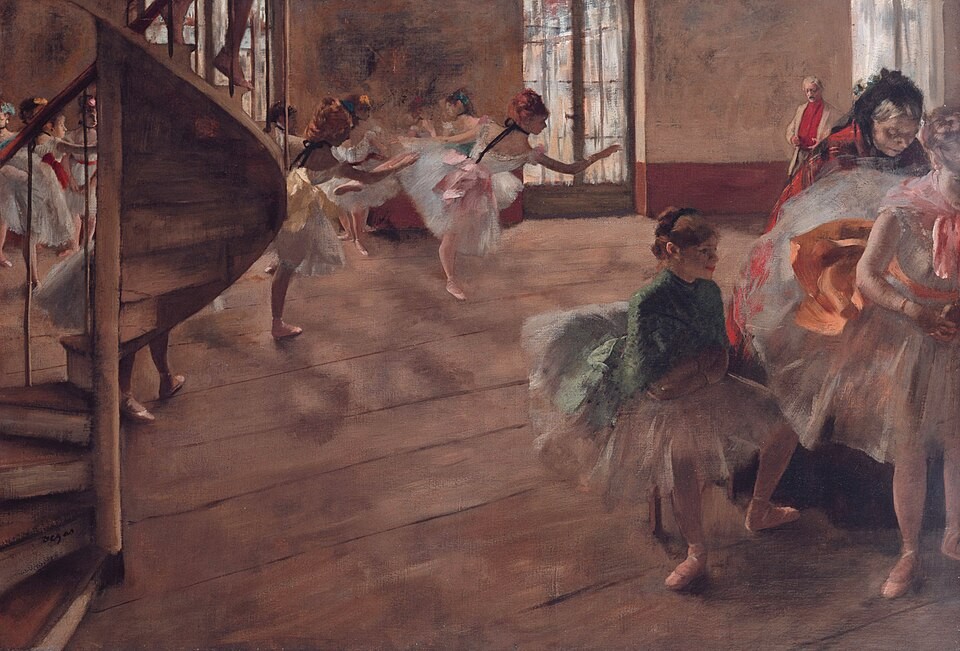
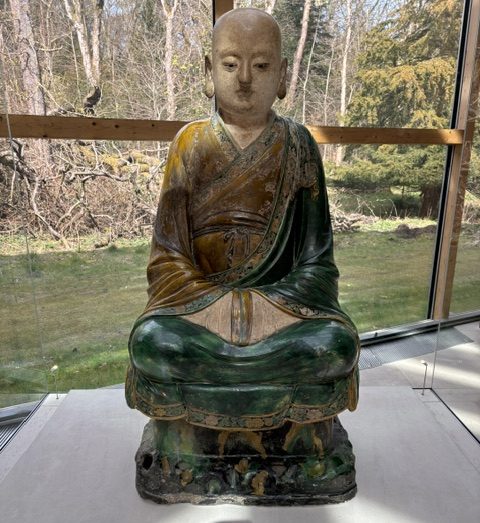
Edgar Degas, The Rehearsal, c. 1874Liu Zhen, Figure of a Luohan, c. 1484
The collection was in storage for many years because Sir William’s stipulations about how it should be housed and displayed made finding a suitable venue difficult. He insisted on a countryside setting to protect the objects from the air pollution of Victorian Glasgow’s heavy industry but he also wanted it to be easily accessible. Finally, a new gallery was designed and built in Pollok Country Park to the south of the city and opened in 1983. Since then, a major refurbishment has increased the amount of space for displaying the collection by opening new areas of the building to the public. A great way to find out more about the collection is to join one of the free guided tours. The guide on my recent visit was knowledgeable about the man behind the collection as well as the artworks themselves so that I left with a better understanding of how Sir William approached collecting and why he gifted the lot to his native city.
The picturesque Fife village of Falkland is dominated by the Renaissance palace that shares its name. The palace and gardens are managed by the National Trust for Scotland and make a great destination for a day out from Tigh a’ Mhaide. The palace was a favourite royal playground where Scotland’s kings and queens hunted and relaxed. More recently, the palace and Falkland village featured in the TV series Outlander, standing in for Inverness.
The medieval castle that preceded the palace at Falkland was a stronghold of the earls of Fife. It became the property of the Scottish crown in 1425 when Murdoch Stewart, earl of Fife at the time, was arrested, tried and executed for involvement in the gruesome murder of the heir to the throne. The murder victim was David, duke of Rothesay, who was thought to have been starved to death at Falkland by Murdoch’s father, Robert.
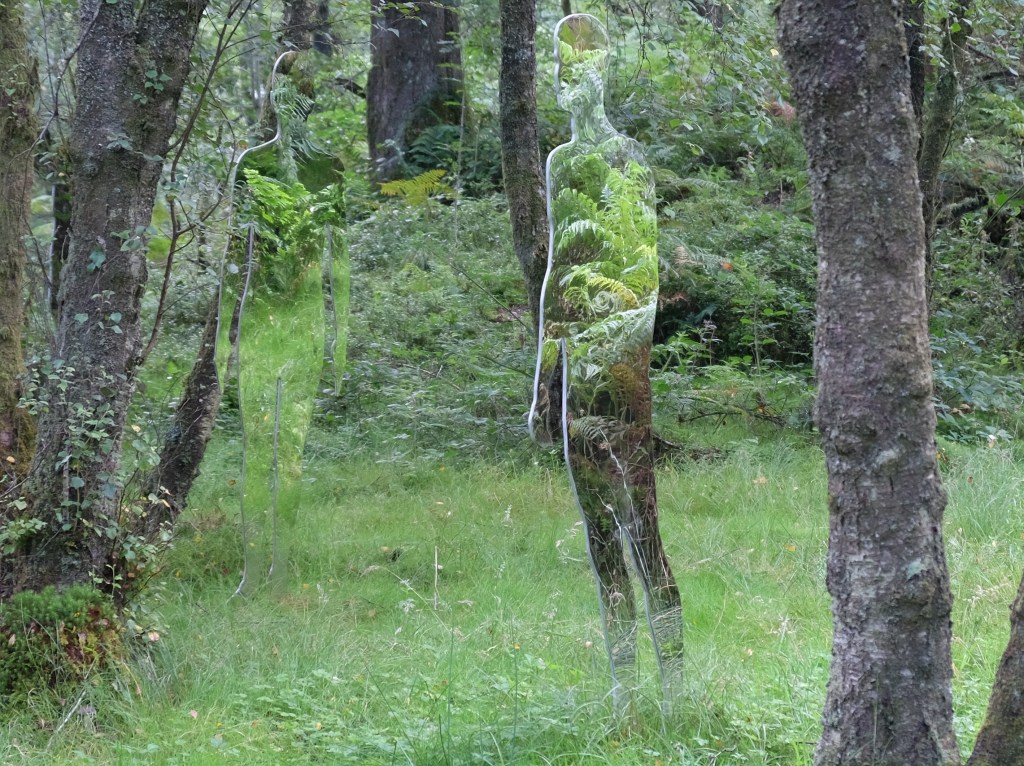
Walkers on the trails at the Forest Lodge Visitor Centre near Aberfoyle might be surprised to encounter some silent figures lurking among the trees. In fact, they are easy to miss but, once seen, are fascinating. They are the work of Scots sculptor Rob Mulholland and aim to encourage us to think about our relationship with both the natural and the man-made environment.
In 2009, Mr Mulholland created a series of six 1.8 metre high sculptures in polished stainless steel for temporary installation near what was then known as David Marshall Lodge.* The installation proved so popular, that Mr Mulholland was commissioned to create a further group of six, life-sized figures for permanent display. Describing the project on his website, the sculptor says: “Before the First World War, this area of Scotland was open hillside with small sheep farming crofts (farms) and rural communities. The crofters were moved to other land by the government as there was a desperate need for timber after the war. The area was planted with fast growing conifer trees suitable for harvesting softwood and the landscape altered once again. One can still see the faint outlines of the crofts and past settlements within the forest.”
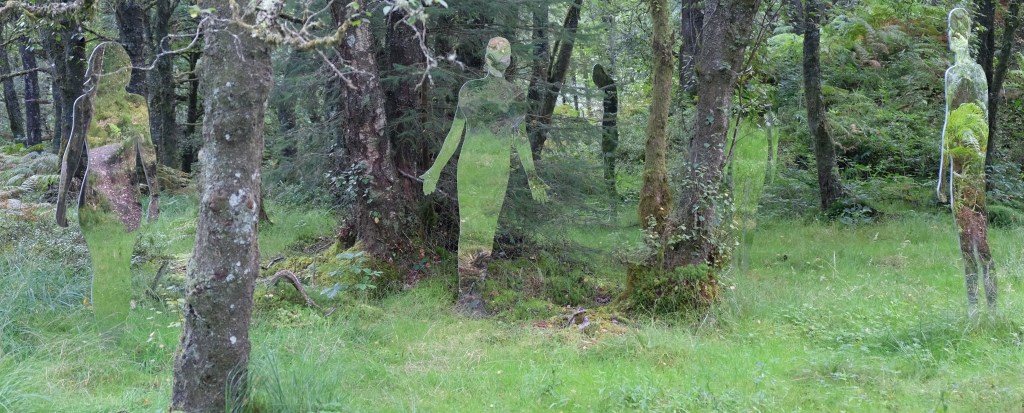
How many figures are in this image?
It is these individuals, the previous residents of the area, that the sculptures represent. They stand quietly in the forest, reflecting the environment and sometimes passers-by. From some angles, they appear in outline, from others they merge into the background, barely distinguishable from the trees around them.
You can read more about these figures and Rob Mulholland’s other public art online here.
* The lodge was built by the Carnegie UK Trust in the 1950s based on the ideas of its chair David Marshall. The Trust gifted the Lodge to the Forestry Commission in 1960s but it continued to be known as David Marshall Lodge until 2013.