Glasgow’s Burrell Collection has something for (almost) everyone

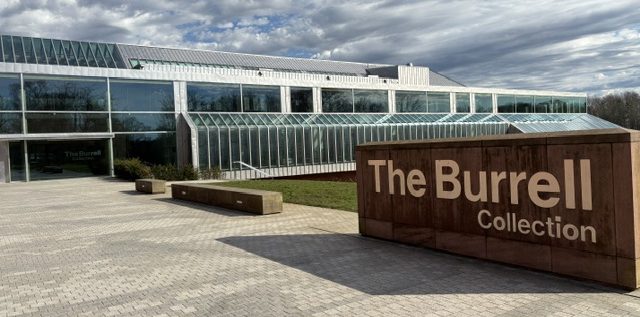
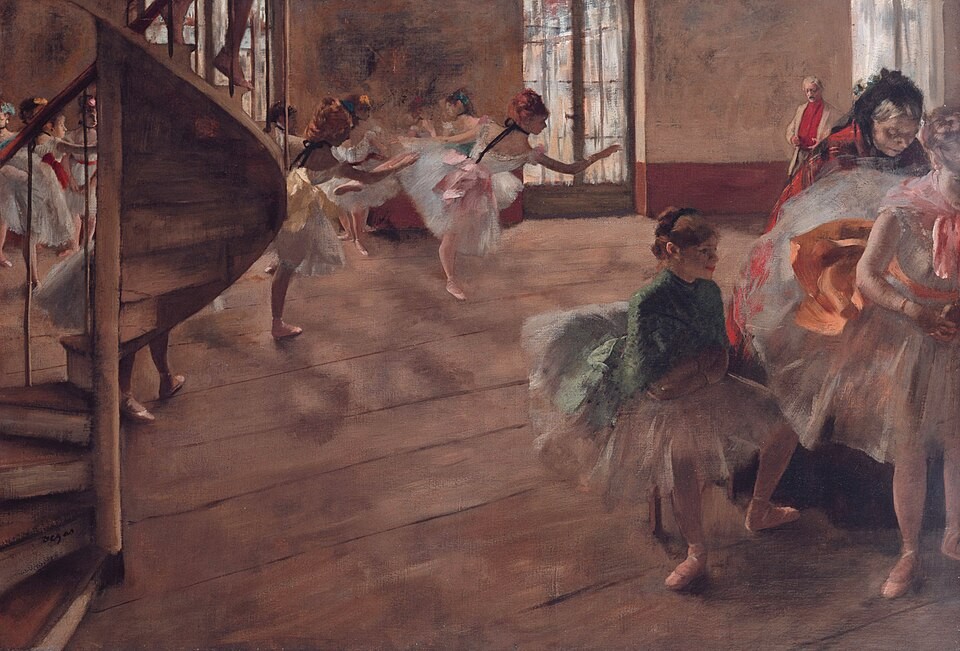
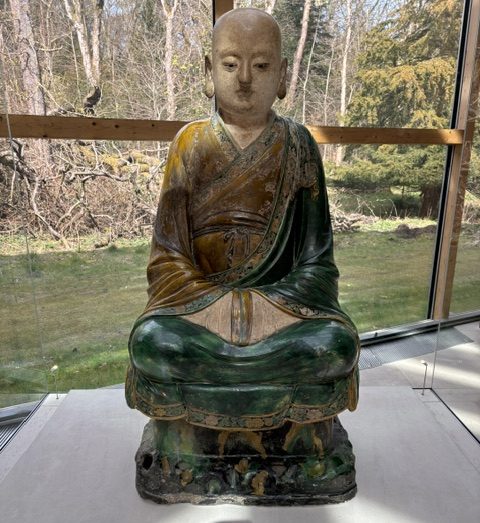
The Burrell Collection, housed in a purpose-built gallery in Glasgow’s Pollok Country Park, is a remarkable collection of over 9,000 artworks and objects gifted to the people of Glasgow in 1944 by shipping magnate Sir William Burrell and his wife, Lady Constance. Begun in the 1870s, the collection includes objects from ancient civilisations, European art, arms and armour, tapestries, stained glass, furniture, architectural fragments and one of Europe’s most important collections of Chinese art.
The collection was in storage for many years because Sir William’s stipulations about how it should be housed and displayed made finding a suitable venue difficult. He insisted on a countryside setting to protect the objects from the air pollution of Victorian Glasgow’s heavy industry but he also wanted it to be easily accessible. Finally, a new gallery was designed and built in Pollok Country Park to the south of the city and opened in 1983. Since then, a major refurbishment has increased the amount of space for displaying the collection by opening new areas of the building to the public. A great way to find out more about the collection is to join one of the free guided tours. The guide on my recent visit was knowledgeable about the man behind the collection as well as the artworks themselves so that I left with a better understanding of how Sir William approached collecting and why he gifted the lot to his native city.

Continue reading
Days out: Falkland village and palace

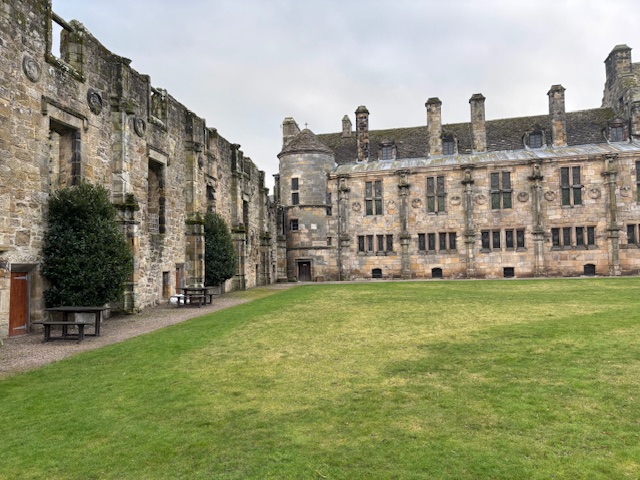
The picturesque Fife village of Falkland is dominated by the Renaissance palace that shares its name. The palace and gardens are managed by the National Trust for Scotland and make a great destination for a day out from Tigh a’ Mhaide. The palace was a favourite royal playground where Scotland’s kings and queens hunted and relaxed. More recently, the palace and Falkland village featured in the TV series Outlander, standing in for Inverness.

The medieval castle that preceded the palace at Falkland was a stronghold of the earls of Fife. It became the property of the Scottish crown in 1425 when Murdoch Stewart, earl of Fife at the time, was arrested, tried and executed for involvement in the gruesome murder of the heir to the throne. The murder victim was David, duke of Rothesay, who was thought to have been starved to death at Falkland by Murdoch’s father, Robert.

Continue reading

Things to do when it rains… Part 3: Visit a historic library

A visit to the Library of Innerpeffray, near the Perthshire town of Crieff, is a must for history and book lovers. Founded around 1680 by David Drummond, third Lord Madertie, it is the oldest public lending library in Scotland. The library initially comprised Drummond’s personal collection of books which he stored in the 16th-century St Mary’s Chapel and made available to local people to borrow free of charge.

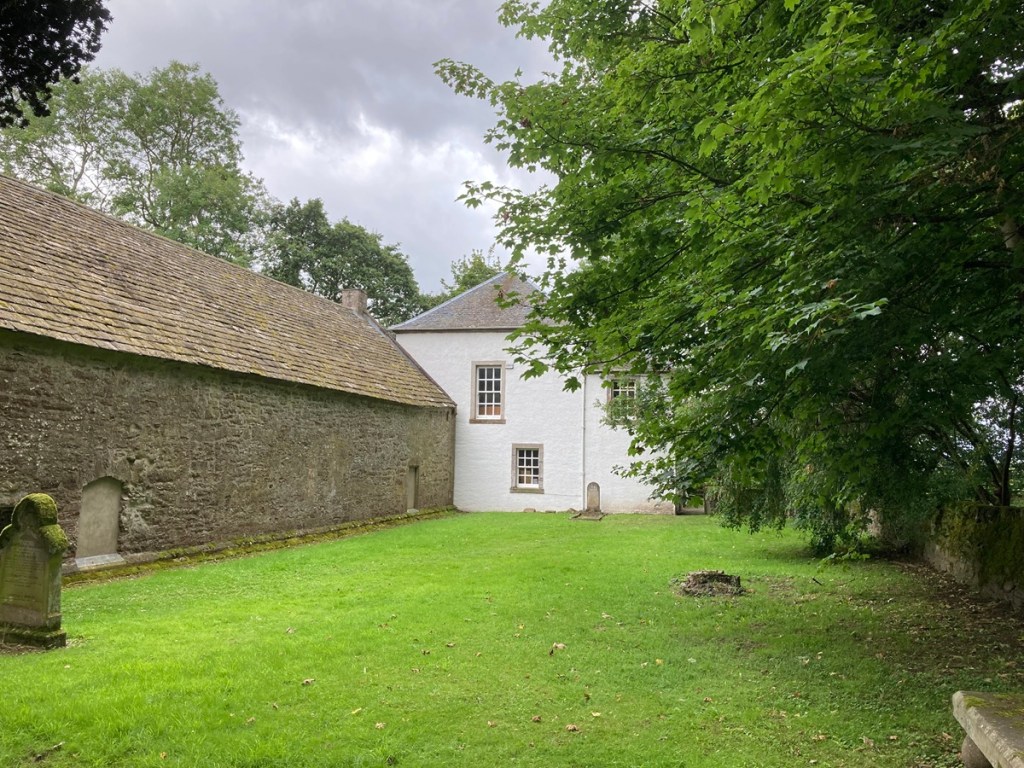
The original library was housed in St Mary’s Chapel (left) before moving to its current home in the purpose-built, adjacent building (centre).

In the mid-1700s, Robert Hay Drummond commissioned a new building for the library adjacent to the chapel and the books are housed there still. On a recent visit, we were greeted as we arrived by Lara Haggerty, Keeper of the Books, who explained the origins of the library, its expansion into the current building and some of the highlights of the collection. Before we started the tour, we got to choose a souvenir bookmark featuring woodcut illustrations from some of the collection’s 16th and 17th century books, and emboss it with the library’s stamp.

Continue reading