
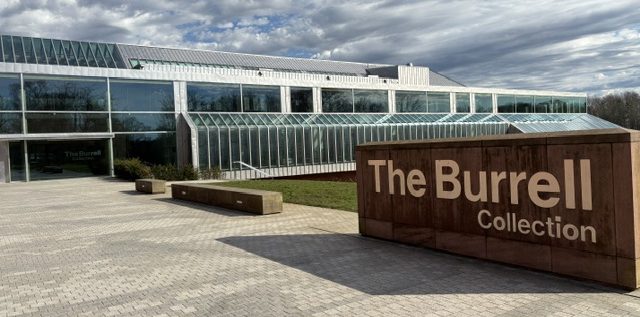
The Burrell Collection, housed in a purpose-built gallery in Glasgow’s Pollok Country Park, is a remarkable collection of over 9,000 artworks and objects gifted to the people of Glasgow in 1944 by shipping magnate Sir William Burrell and his wife, Lady Constance. Begun in the 1870s, the collection includes objects from ancient civilisations, European art, arms and armour, tapestries, stained glass, furniture, architectural fragments and one of Europe’s most important collections of Chinese art.
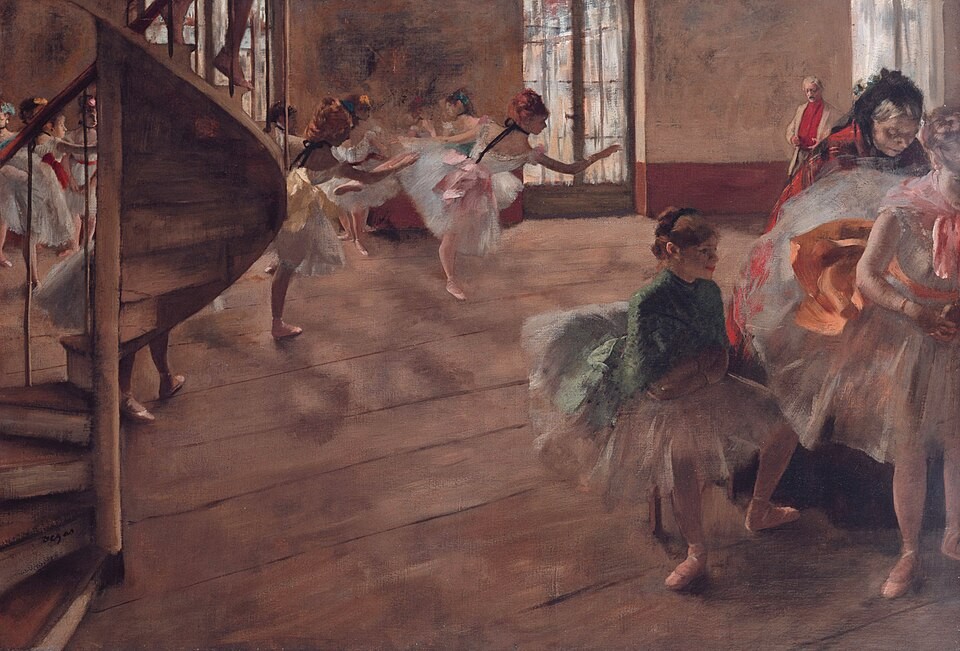
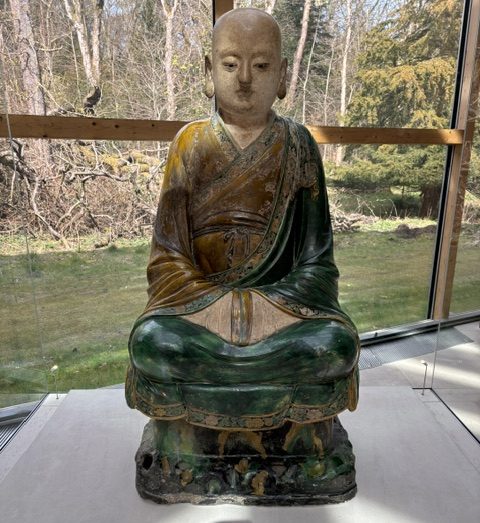
The collection was in storage for many years because Sir William’s stipulations about how it should be housed and displayed made finding a suitable venue difficult. He insisted on a countryside setting to protect the objects from the air pollution of Victorian Glasgow’s heavy industry but he also wanted it to be easily accessible. Finally, a new gallery was designed and built in Pollok Country Park to the south of the city and opened in 1983. Since then, a major refurbishment has increased the amount of space for displaying the collection by opening new areas of the building to the public. A great way to find out more about the collection is to join one of the free guided tours. The guide on my recent visit was knowledgeable about the man behind the collection as well as the artworks themselves so that I left with a better understanding of how Sir William approached collecting and why he gifted the lot to his native city.
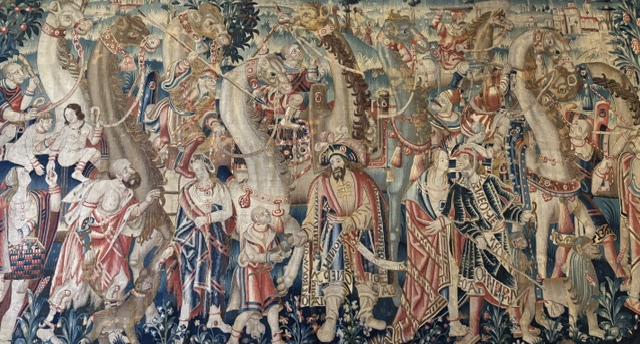
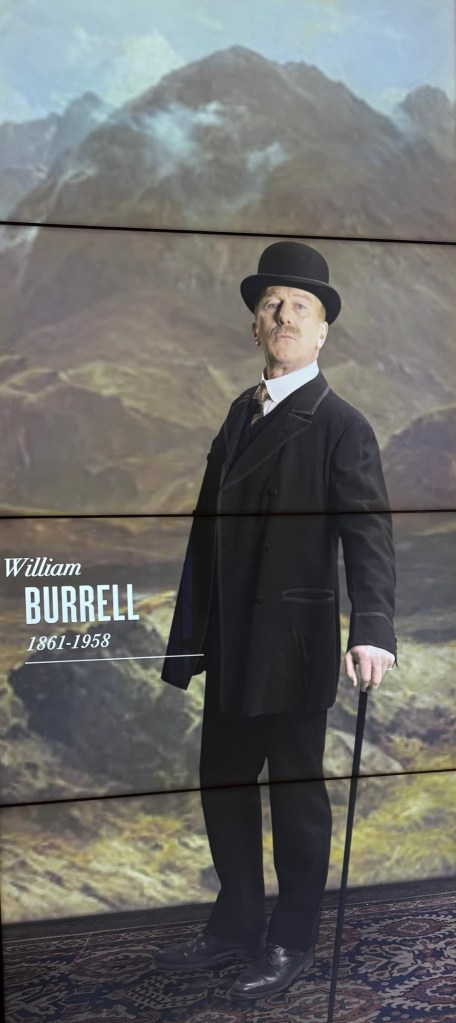
Sir William made his fortune through the shipping company established by his grandfather in the 1850s. The company profited handsomely from the British Empire, trading with the West Indies, Asia, Australia and North America. While Burrell bought his artworks legally through legitimate art dealers, the route to the saleroom of some of these objects involved theft and looting (which was not illegal in the colonial wars of the late 19th century). Many items in the Burrell Collection are of British or European origin, but others are undoubtedly linked to colonialism, enslavement and imperial violence. In recent years, the collection’s curators, in common with museums across the country, have begun to acknowledge this, and the continuing harm caused by historic colonial practices, in their displays, research, education programmes and events.
The Burrell Collection is well worth a visit for the eclectic mix of artworks and objects on display in its ground-floor galleries, but upstairs are six additional galleries about the people who made items like the ones in the collection, and the materials they used to create them. These galleries have some interactive displays likely to appeal to younger visitors who might be itching to touch things when much of the collection is behind glass or otherwise out of reach.
The gallery is free to visit and easily reached by public transport but there is also Pay & Display parking close to the gallery and more parking (with a few EV charging points) about 10 minutes away at Pollok House. Oh, and did I mention the restaurant? It serves everything from coffee and cake to knife-and-fork meals and is large enough that only during the busiest periods is finding a table likely to be a challenge. As you would expect, prices are not the cheapest but it’s very convenient. Alternatively, take a picnic and make the most of the gallery’s setting in Pollok Country Park .

