Mirror, mirror among the trees…

Walkers on the trails at the Forest Lodge Visitor Centre near Aberfoyle might be surprised to encounter some silent figures lurking among the trees. In fact, they are easy to miss but, once seen, are fascinating. They are the work of Scots sculptor Rob Mulholland and aim to encourage us to think about our relationship with both the natural and the man-made environment.
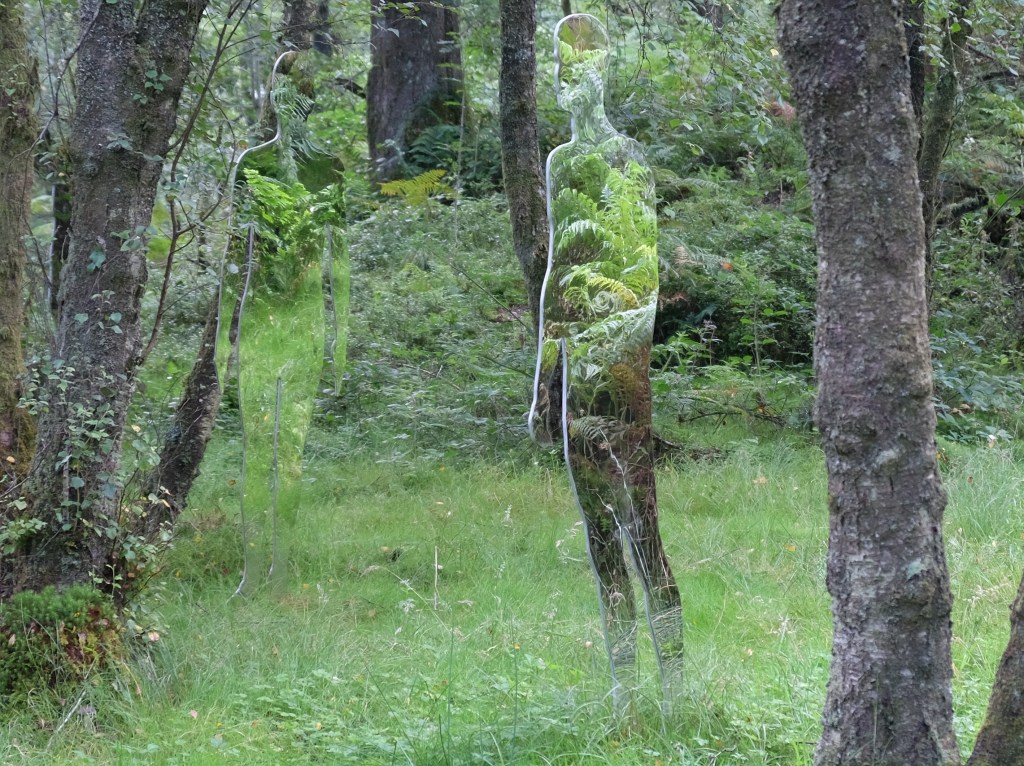
In 2009, Mr Mulholland created a series of six 1.8 metre high sculptures in polished stainless steel for temporary installation near what was then known as David Marshall Lodge.* The installation proved so popular, that Mr Mulholland was commissioned to create a further group of six, life-sized figures for permanent display. Describing the project on his website, the sculptor says: “Before the First World War, this area of Scotland was open hillside with small sheep farming crofts (farms) and rural communities. The crofters were moved to other land by the government as there was a desperate need for timber after the war. The area was planted with fast growing conifer trees suitable for harvesting softwood and the landscape altered once again. One can still see the faint outlines of the crofts and past settlements within the forest.”
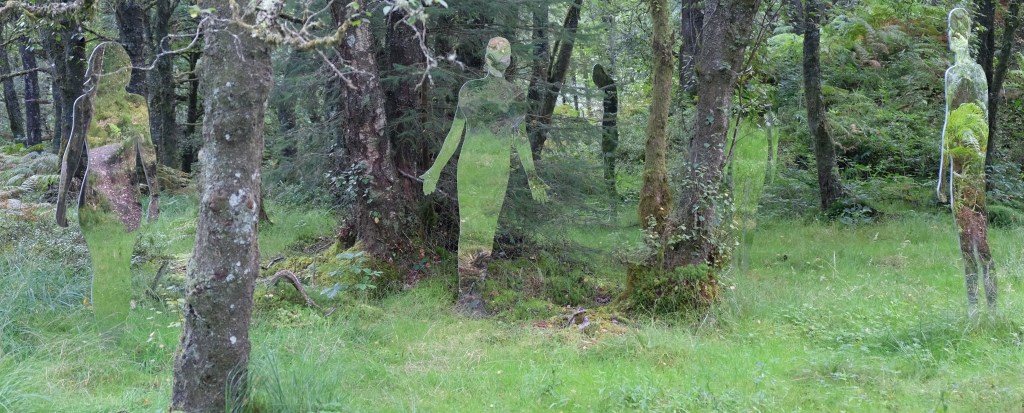
How many figures are in this image?

It is these individuals, the previous residents of the area, that the sculptures represent. They stand quietly in the forest, reflecting the environment and sometimes passers-by. From some angles, they appear in outline, from others they merge into the background, barely distinguishable from the trees around them.

You can read more about these figures and Rob Mulholland’s other public art online here.

* The lodge was built by the Carnegie UK Trust in the 1950s based on the ideas of its chair David Marshall. The Trust gifted the Lodge to the Forestry Commission in 1960s but it continued to be known as David Marshall Lodge until 2013.
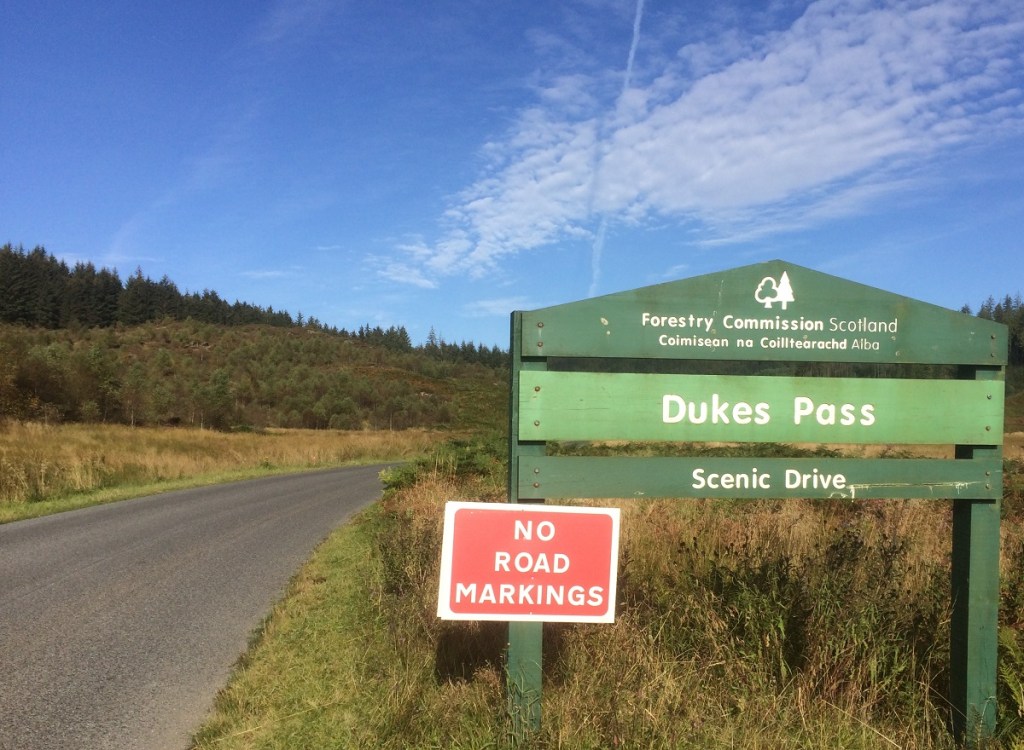
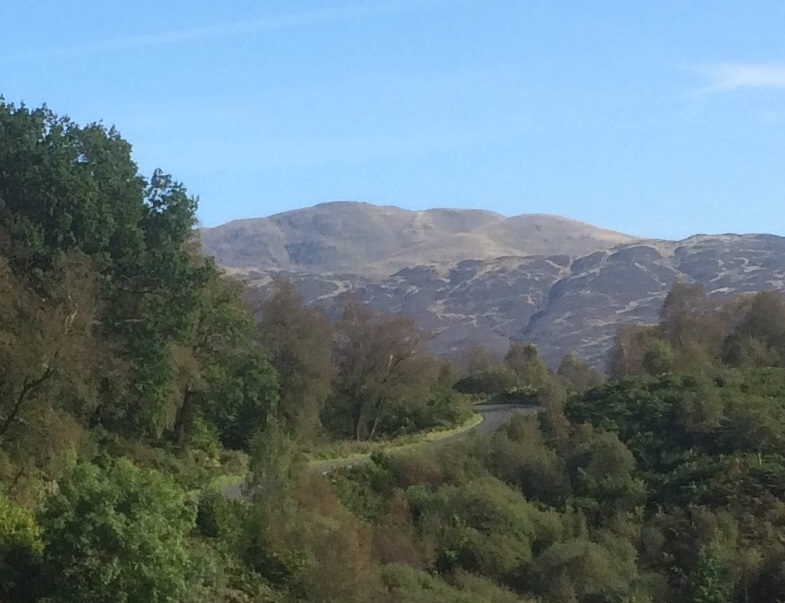
The Duke’s Pass: What’s the story?

The Duke’s Pass connects Aberfoyle with Loch Achray and gives access from the south to Loch Katrine and Brig o’ Turk. Now a public road forming part of the A821, The Duke’s Pass is a popular route for cyclists and is often considered to be one of the country’s most scenic drives. The road featured in the BBC’s series Britain’s Best Drives with actor Richard Wilson.

The modern road follows one built in the 19th century by the landowner Douglas Graham, the 5th Duke of Montrose, to improve access around his estates and to the slate quarry above Aberfoyle. Originally little more than a track suitable for horses, the road in the pass between Ben Venue and the Menteith Hills was improved to accommodate the influx of carriages as Victorian visitors flocked to The Trossachs following the publication of Sir Walter Scott’s narrative poem The Lady of the Lake. In 1931, after the land was acquired by the Forestry Commission, construction of a public toll road began as part of a scheme to provide work for unemployed miners.

Travelling south to north, Ben Ledi comes into view as the Duke’s Pass begins its decent to Loch Achray.
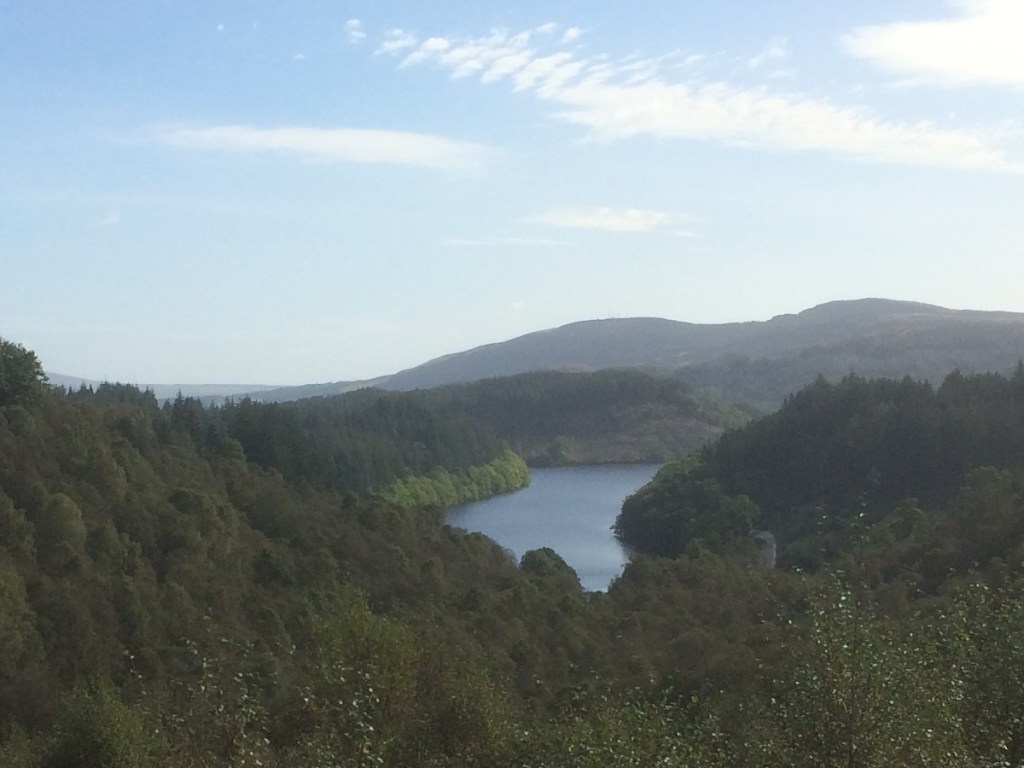
Loch Drunkie is visible far below from the Pass.

The road remains popular with visitors to the Loch Lomond and The Trossachs National Park. It is the route to the Three Lochs Forest Drive, and features regularly in cycling races. It provided the Queen of the Mountain challenge at Stage 2 of the inaugural Women’s Tour of Scotland cycle race this summer and features as the hill climb in the annual Duke’s Weekender cycle event.

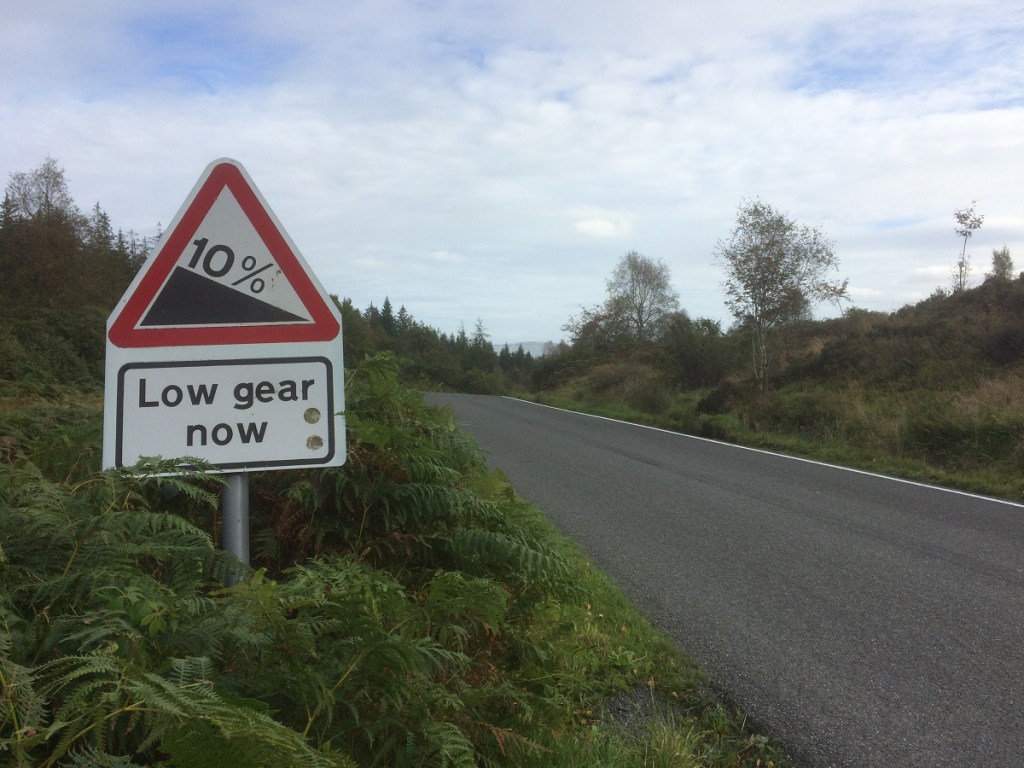
The climb up from/decent to Aberfoyle is steep and winding making it a favourite for cycling hill races.
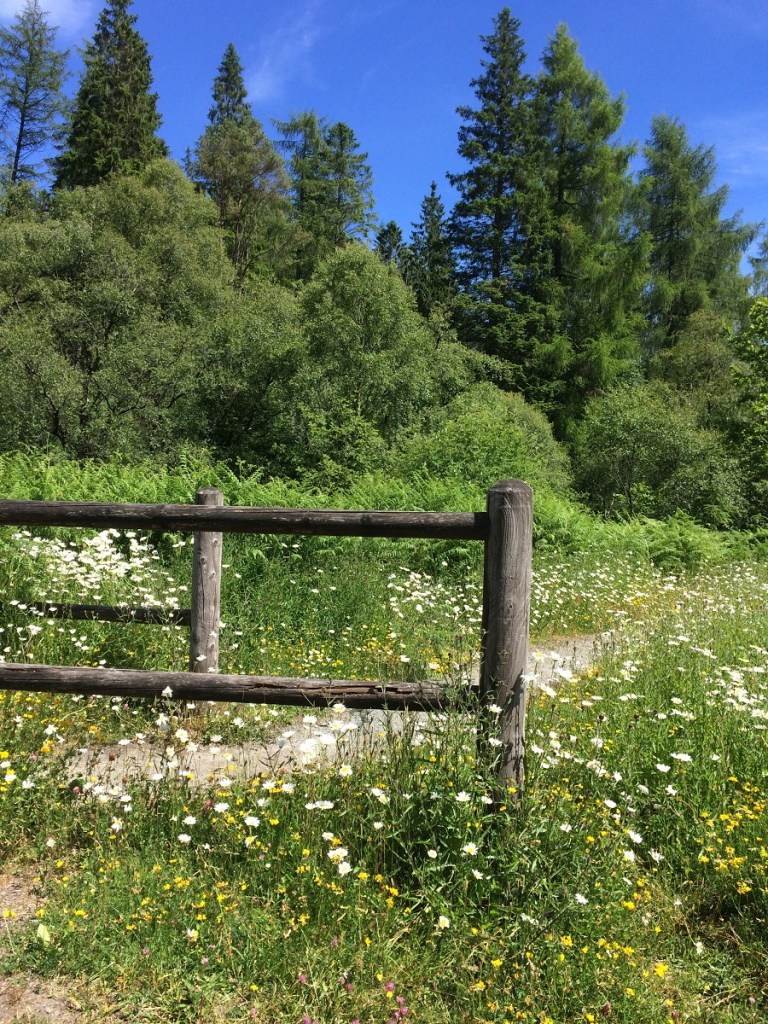
A number of walking paths, replete with wild flowers in spring and summer, cross or lead off the Pass.

Passing below the aptly-named Creag Mhòr (big rock), the road winds up from Aberfoyle towards the Lodge Visitor Centre. The Lodge was originally named after David Marshall, Chairman of the Carnegie Trust and the prime mover behind the building of the Lodge in the 1950s. The Trust gifted the Lodge to the Forestry Commission in 1960. Beyond, the road passes within sight of the quarry which produced slates, including those on the roof at Stirling Castle, from the 17th century until its closure in 1954. The ridge above the quarry is said to be the site of a violent clash between cattle reivers (thieves) from Lochaber and their local pursuers. A dozen men are thought to have died in the fight.

Near the top of the pass and the entrance to the Three Lochs Forest Drive, is Creag Mhadaidh (Wolf Rock). Wolves were hunted to extinction with official records dating the killing of the last wolf to 1680. However, reported sightings of wolves continued for a further 200 years. Could the intriguing name mean that wolves were spotted at Creag Mhadaidh?

A walk by Loch Drunkie

There are 22 major lochs and numerous smaller lochs and lochans in Loch Lomond and The Trossachs National Park. Among the smaller freshwater lochs is Loch Drunkie which lies to the south of Loch Venachar and is accessible from the Three Lochs Forest Drive off the Duke’s Pass between Aberfoyle and Loch Achray. The loch is the starting point for three walks.

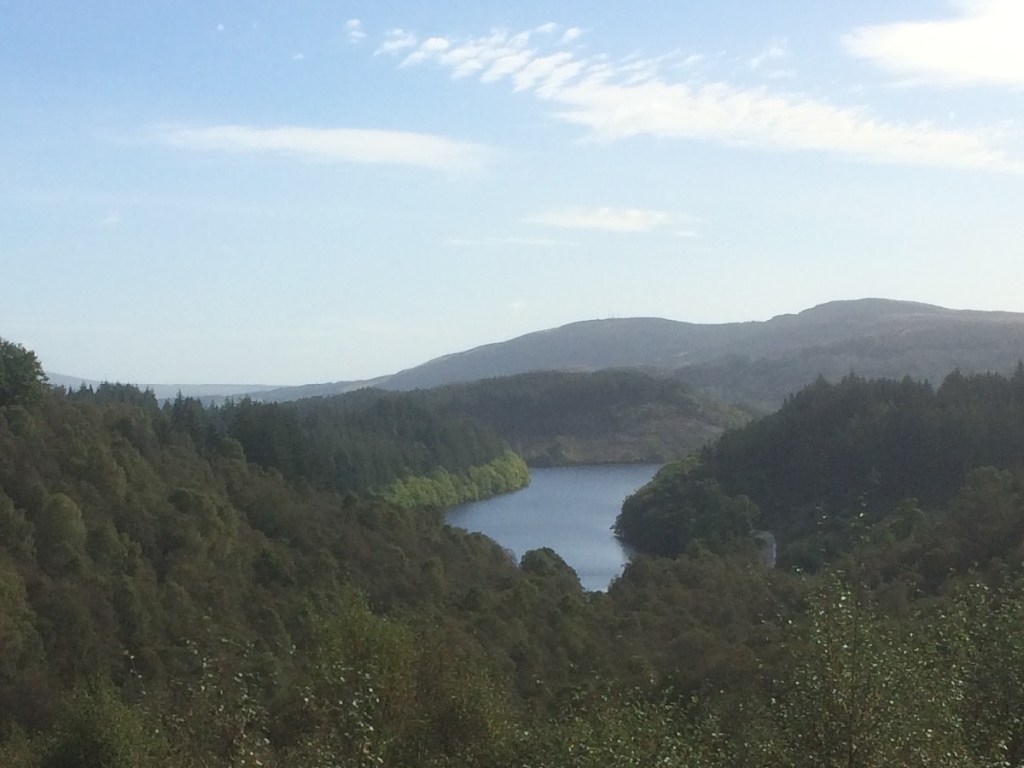
Loch Drunkie is visible below from the Duke’s Pass

The loch’s name is a curious one and its origins are obscure. Drunkie is an anglicised version of the loch’s Gaelic name, Drongaidh. The name dates from at least the 15th century and may simply refer to the physical characteristics of the loch which lies in a hollow or depression in the landscape.

The first glimpse of Loch Drunkie in the distance from the Forest Drive
Continue reading